Dialectical Behavior Therapy is a therapeutic modality that provides skills and tools to help people regulate their emotions. One of the core components of DBT therapy is the "dialectical" part. It's the ability to recognize that two seemingly contradictory things can both be true, and that holding both truths can lead to a more balanced perspective.
For example: In moments of grief, let’s say at a grandparent’s passing after they have been sick for a long time, you may feel understandably sad about their passing, but also maybe a little relieved they are no longer in pain. Both of these emotions are real and while they may seem counterintuitive, they both have a place within grief. One truth does not over ride the other.
One tool DBT uses to help illustrate this point is the Wise Mind illustration:
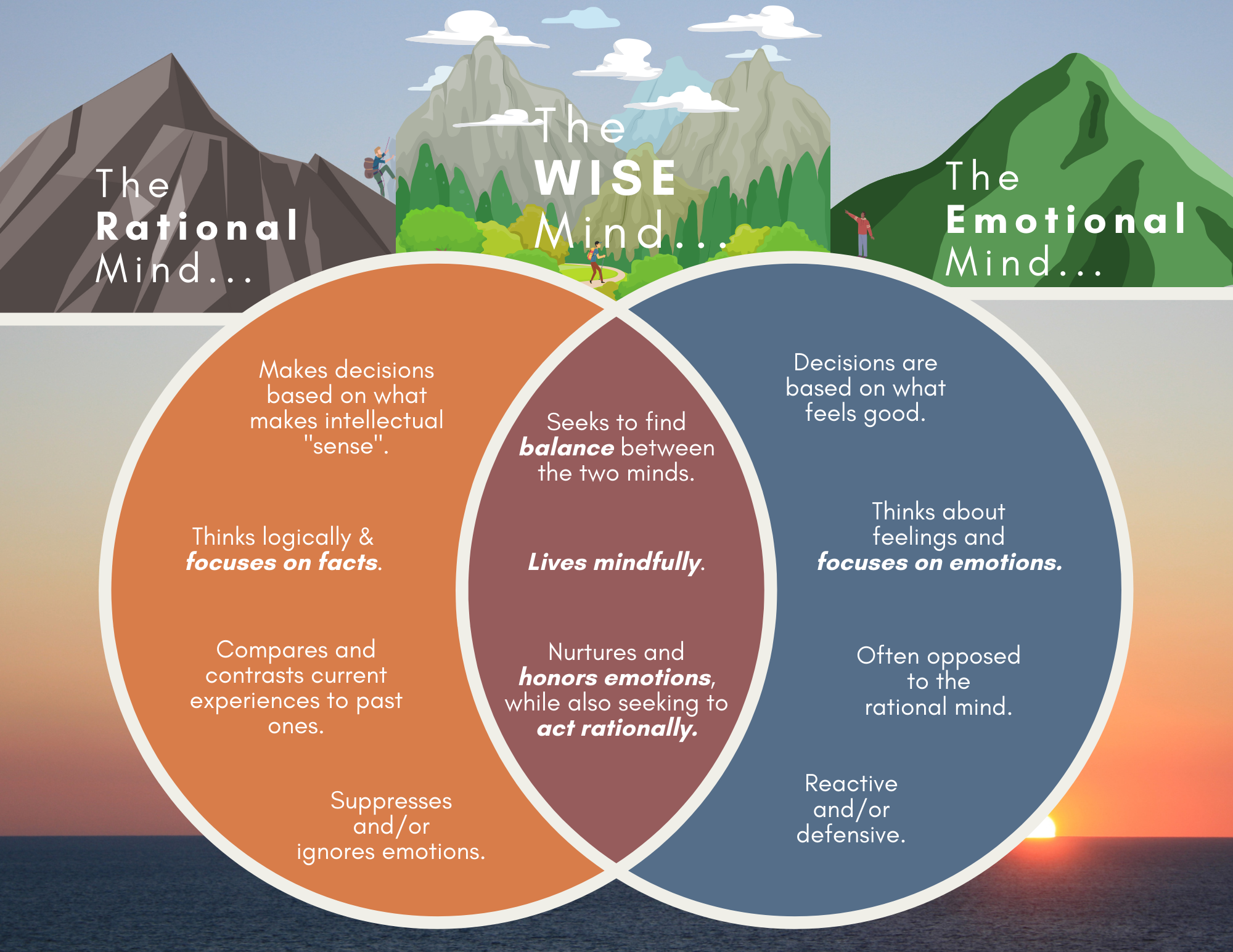
This illustration seeks to help people understand that both emotions and facts hold a place in mental and emotional health. Using Wise Mind is incorporating both of them rather than leaning too heavily, or solely, on one or the other. Wise Mind isn't necessarily about splitting the difference between what you feel and what you think. It's about recognizing that both have valuable information to offer and learning how to make decisions that honor the bigger picture.
As a teenager and young adult, I was almost all Emotional Mind. I often made snap decisions based on what I was feeling in the moment without thinking through the potential consequences or fallout from that decision. This tended to get me into some trouble, as what feels good in the moment, especially when emotions are high, usually wasn’t the best decision in the long run.
An example of this might be feeling sad or lonely one night and texting an ex that you had sworn off for good reasons just to soothe the temporary loneliness. Or being angry at someone and giving them a raw and unfiltered opinion that potentially damaged our relationship forever just because you were mad at the time.
On the other side, there is the Rational Mind. This side keeps emotions completely out of the picture. It tells you to do something or make a decision strictly based on facts and what looks good on paper. Like staying at a job that pays well but is mentally and physically draining and goes against your values. It makes logical sense on paper to stay at the job and collect a paycheck, but you hate going into work every week, don’t have much energy to enjoy life outside of surviving each work day, and maybe you even have to do things at work that you simply don’t agree with.
Wise Mind suggests that both emotional and rational mind play a part in making decisions that are right for you. It is important to acknowledge the emotions and values coming up for you - like anger, sadness, integrity, fairness - and it is equally important to think through your options and play out the potential outcomes for the choices you have in front of you.
When I work with clients who feel conflicted, I usually ask them to lay out all the options, even the really bad ones, and we talk them through to the end together. Much of the time, we laugh about some of the bad options and it feels good to at least say them out loud and acknowledge that while some of those options might feel good in the moment or make the most rational sense, they aren’t really the option that would benefit or feel good to them in the end.
Take one of the previous examples of staying at a job you hate. Your options might include:
Staying and collecting a paycheck. Continue to feel run down all the time and put up with a dysfunctional or unappreciative work environment. This choice may leave you feeling like you are simply trying to survive each day. This might be Rational Mind’s decision. The question becomes: How long can you survive like this? How long do you want to keep trying to survive like this?
Quitting dramatically and immediately. Throw both middle fingers up, tell your boss exactly what you think about them, and quit. While this choice may feel good at the moment and it’s fun to fantasize about, it might mean that you now don’t have a way to pay your bills and you have another set of issues to worry about. This is Emotional Mind’s decision. The question becomes: Even though that felt good in the moment, how will this choice impact you in the days and weeks to follow? Are you prepared to accept the fall out of that decision?
Making a plan and preparing for a transition. Dedicate some time each week to updating your resume. Start writing down the aspects of a job you enjoy doing, you’re naturally good at, and the kind of work environment where you thrive. Set a commitment to searching for a new job a couple hours a week. Maybe even set a goal to apply for a certain amount of positions per week. Reach out to others in the field you are interested in and find out more about how to apply for those positions. In the meantime, start trying to save some money for a little cushion in case you need to push the Emergency Exit button. Take your PTO or talk to your HR rep to see if the PTO is paid out when you leave your job. This is using Wise Mind! The question becomes: What is in your control right now? You have acknowledged you don’t want to work here anymore and you also know that you need to plan an exit that doesn’t put you in a bind once you leave.
Notice that Wise Mind doesn't necessarily mean staying in a situation that makes you unhappy just because leaving is inconvenient. It means recognizing that your well-being matters AND that your practical needs matter, too.
People have a natural propensity to lean a bit more one way or the other. Some folks can really endure a lot of emotional pain so they can stick to the most rational decision. And some people listen to their heart so well that they sometimes jump the gun and make knee-jerk decisions without a lot of planning.
Neither of these ways of approaching decisions is inherently bad. In fact, both serve an important purpose. Our emotions help us recognize what matters to us, while our rational mind helps us evaluate information and anticipate consequences. The challenge is learning when we might be leaning too heavily on one at the expense of the other. Wise Mind is about finding balance between the two and being able to honor both what you feel in your heart and what you think in your mind.
Learning to use Wise Mind takes practice. It means slowing down long enough to recognize what you're feeling, looking honestly at the facts in front of you, and giving yourself permission to consider both before making a decision. You don't have to ignore your emotions to make good decisions, and you don't have to abandon logic to honor what matters to you. Sometimes the best decisions happen when you learn to make room for both.
Interested in learning how to use Wise Mind in your own life? I'd love to help you explore this skill and apply it to the situations you're navigating.
Let’s See If We’re a Fit
I offer a free 15-minute consultation to discuss your needs, goals, and how we might work together.

Reading this because of your own teenager?
Fifteen years of this work, online across Texas. A short chat costs you nothing.